What is it?
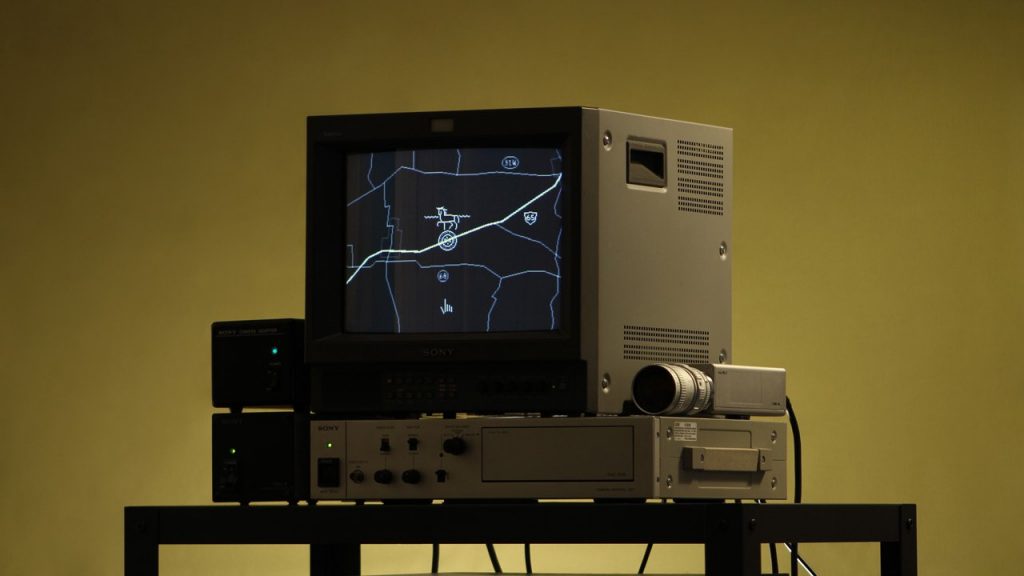
The first of two works is a small audio/visual installation. It consists of a reel-to-reel tape machine, an oscilloscope and a pair of studio monitors. It is presented in a demonstration format and it is not interactive. The tape has an audio signal pre-recorded on it that plots the vector display of an accompanying oscilloscope (on its XY mode). Its presentation is made to resemble a high-fidelity audio system paired with analytical equipment.
The second work is a large scale projection of audio-driven vector graphics. Ideally presented in a low light environment, the monochromatic projection stochastically draws ‘images’, shapes, primitives and amorphous figures that are all derived from an audio signal. A machine learning model trained entirely on audio defines what is presented on the projected display. The work is abstract in its appearance. The two works are an effort to encapsulate a ‘memory’. The theory is inspired by the work of Dr. Tomás Ryan, an Irish professor and his work on the ‘Engram’ – how memories are physically stored in the human brain.
Why?
This work questions just how memory works by pairing contemporary medical research with that of mechanical and analog devices. It interrogates the very concept of memory by forcing its biology onto that of analogues mechanical tools. There is a common adage that the brain is akin to that of a database or a CPU. I always avoided this analogy as those arguments begin to fall apart quickly when under any scrutiny – however, today there is new research that reaffirms that memory holds a distinct place within the brain. This work attempts to manifest this research by dramatising the synaptic firing of the human brain with that of an oscilloscope. It leans heavily on analogues terminology, by borrowing from recent research papers and by positing an alternative future that is divorced from ‘data’ as we know it.
The first work acts as my statement of intent. It demonstrates to the viewer of the sterile nature of the technology being utilised, while providing an opportunity to demonstrate how signal defined images work at its most base form. Not only does this show the viewer that images can be drawn using audio signals, it also lives as its own piece of work. This is because the choice to use analog reel-to-reel tape commits the audio to a medium that will degrade over time; demonstrating that an encoded signal (a memory, if you will) is subject to atrophy. That it is not the same when presented a 2nd time, a 3rd time etc. The pre-recorded audio (and in turn, its imagery) will be pristine at the beginning of biennale and deteriorated by its end. Doing this exemplifies the limits of traditional recording mechanisms, while working as a piece of time based media in and of itself. Think of the work as a countdown clock, each loop of the tape is a slow march to its own demise. The use of tape as a medium is also a practical measure as the recording format grants me enough fidelity to properly encode high frequencies – where audio cassettes or vinyl records may fall short. The working title is ‘Wow & Flutter’. This is an audio engineering term for the loss of quality, the degraded warping of the physical tape itself. The words themselves also connote astonishment and grace.
The second work is of a larger scale and features an interactive element. A tactile interface adds a playful element that draws the viewer in, inviting them to interact and manipulate a physical control panel. This is done in an effort to allow the viewer to actively participate in the work. The machine learning model acts as a ‘memory’. It is a dedicated representation of a memory, biological or otherwise, that is captured, remembered and distorted. Viewers are encouraged to manipulate and disrupt the work. The kicker here is that they are actually manipulating a DAW (digital audio workstation) and not a 3D program. This is not a game engine, nor an elaborate visual renderer. It is my hope that this encourages investigation from the audience, almost as an act of data forensics. Vector graphics are divorced from resolution and pixels. They rely on voltages, electrical signals to plot images. Scopes are tools of scientific measurement and analysis of electrical signals. I believe this to be a succinct expression of how the synaptic firing within the brain is to be visualised. These too are violent electrical signals, just at a smaller scale.
How?
The first work consists of a reel-to-reel tape player, a standard oscilloscope and a couple of small studio monitors. These can be arranged neatly on trolly/cart, reminiscent of something you might see on a video village OR affixed to a wall. The only moving piece within the work is a single tape loop, playing indefinitely on the reel-to-reel player, in which the left and right audio channels are split to go to both the audio monitors, and into the XY channels of the oscilloscope. Allowing the viewer to both hear and see what is encoded onto the tape loop. Mains power will be required for these three devices.
The second work requires a projector. The medium of which the projected image will be displayed on is to be determined. It could be very well be canvas suspended from the ceiling or coated glass – as long as it is visible to all within the space it is presented in and does not distract from the projected work itself. Two monitors will provide the accompanying stereo audio, ones large enough to encapsulate the space. These will be positioned discreetly in the space and will not draw attention to themselves. The interactive audio equipment will be placed in the center of the gallery space and will have a small spotlight illuminating it.
Both works one and two have an audio component to them. To avoid overlap, work one would either need to be a short distance away from where work two is presented OR allow the use of attached over-the-ear headphones in the place of studio monitors.
Software used: MaxMSP, TouchDesigner, TensorFlow, Blender
Hardware used: Mac Mini for processing
Timeline
Given the scope of this project, the most time consuming factor would be sourcing some of the equipment needed. Notably a functioning reel-to-reel tape player. As this is all in service of a biennale, a year to complete this work is a significant amount of time, considering. The bulk of this work lies within the code and its research, both of which have been in development since 2016 – having only found application since the recent democratisation of machine learning tools. Living in Trondheim as I do, alleviates the travel expenses and logistics of storing the work until spring 2026.
The second work does feature an audio component. It is in stereo and attempts to encompass the space it lives in, next to the projection. Although, there is scope to add a spatial audio element to the second work. One that attempts to better replicate the stochastic nature of the generative audio and its presence within three dimensional space. This is of subject to the size of room of which the work would be presented in and a discussion with the curator(s).
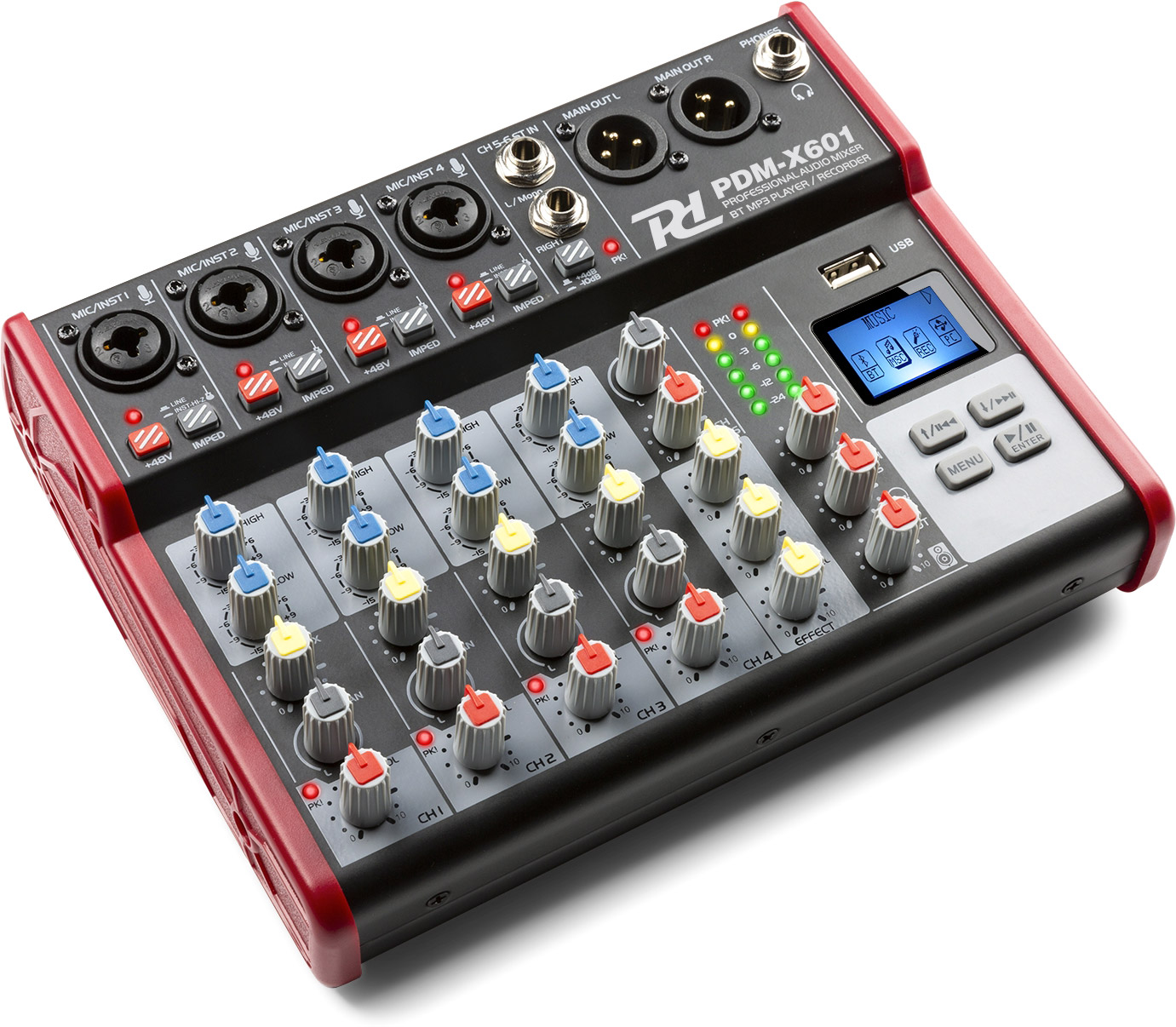
There will be an interactive element to the second work. This comes in the form of some analog hardware. This hardware will take the form of some piece of audio equipment – because it is a DAW that is being utilised, it only makes sense that an audio mixer or a synthesiser be the device that allows the viewer to manipulate and augment the experience.
As of 2025 I am not promised to any other large scale projects or commitments and as a result this call would be my primary focus.
Look book
These images are not my own. They are intended to provide visual examples of how I believe the work could resemble when presented in the gallery.
Work 1


Work 2